The “Propylæa” form the official entrance to the sanctuary of the Acropolis ( 13 ). Built by the architect Mnesicles, this monumental gate was erected during the time of Pericles, taking into account the complexity of the location. It is a construction made of Penthelic marble with a length of 170 ft. A 71 ft broad flight of stairs of 16 steps, leads us to the building, adorned with two wings apparently symetrical. The way through the central monument of the Propylæa was called “the Panathenaic Way”
.


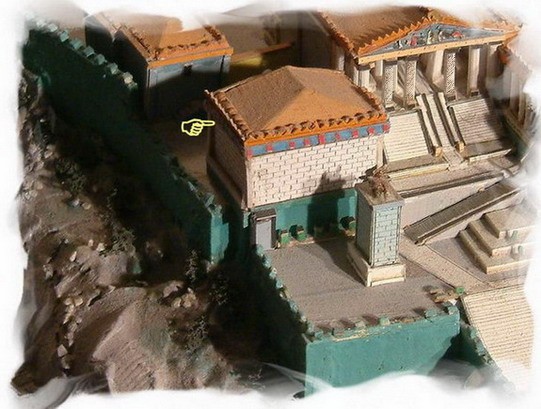
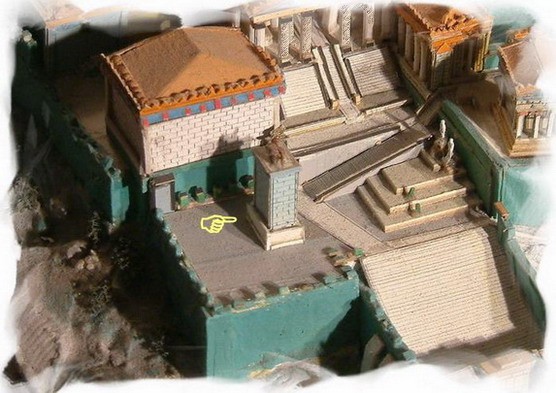
In the foreground are the pylons of Fl. Sept. Marcellinus, which, by the addition of a wall-link, were altered to form a massive entrance gate (15) facing the Propylæa. It’s only in 1852 that the French archeologist Ernest Beulé discovered this gate, now called the Beulé gate. Slightly on the right of the picture, one notices a path leading to a gate which should have been the entrance to the Acropolis before the construction of the Beulé gate, and probably as well after its construction. Going down the slope, on the left, visitors could see a small sanctuary, the sanctuary of Ægeus or Ægion. It had been necessary to dig a notch in the rock to be able to build this small building.



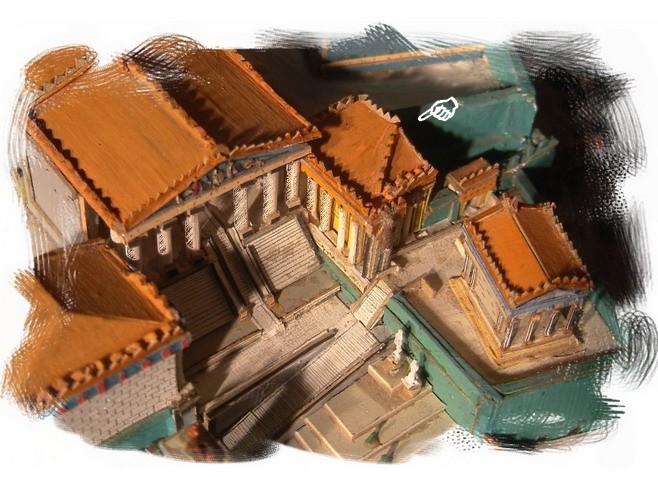
The north wing, on the left hand side of the Propylæa ( 13b ), also called the “Pinakoteke”, must have housed wood paintings. This hall was badly lit and could have been originally the porters’ lodge.


Facing the north wing, one finds a pedestal of a statue from the hellenistic period ( 15 a ). On its top rose a bronze quadriga, which later was dedicated to the statue, equally on a quadriga, of Marcus Vipsanius Agrippa, friend and later son-in-law of Cæsar Augustus.


The south wing ( 13a ), in the centre of the picture, was much less developped, due to the fact that it was limited by the temenos (sacred area) of Athena Nike.


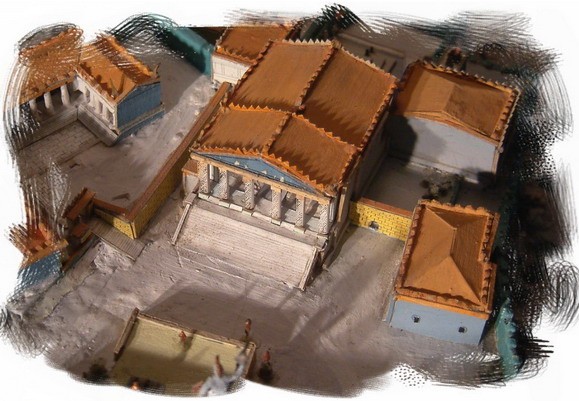
The actual propylæa is a 24 m long and 18 m wide rectangular hall. The exit side of the building, seen on the picture, as well as the entrance side, show a façade with 6 doric columns. The main building was the entrance and ceremonial way, consisting of two halls with columns, leading to the sanctuary.